Journal

Notes from the garden, the studio and the field.

Latest entries

Notes, fresh
from the ground.

Seasonal notes

The last cut
of the year.

The clocks have gone back and the light is fading fast. Most lawns in the UK are due their last mow of the year around now, and it is worth getting it right. This one sets the grass up for winter.

Raise the blade. The final cut should leave the grass a little longer than usual, around five centimetres. Longer grass holds up better through frost and wet weather. It is more resilient against disease and less likely to thin out over winter. The tight, close-cropped look can wait until April.

If the lawn is covered in fallen leaves, clear them before you mow. A thick mat of wet leaves left sitting on the grass will smother it. The grass underneath goes yellow, thins out, and moss moves in to fill the gaps. Rake them up or run the mower over them on a high setting to chop them into the surface, where they break down and feed the soil instead of suffocating it.

Once the last cut is done, stay off the lawn when it is waterlogged or frozen. Both will damage the grass. Compacted, saturated soil squeezes out air and wrecks the root structure. Frost leaves bruised, blackened patches that take weeks to recover. If you need to cross the garden through winter, use a path.

Then leave it alone. The grass is dormant, and it does not need your attention. The first cut of the new year can wait until March or even April, when growth picks up and the soil has dried out enough to take your weight without harm.
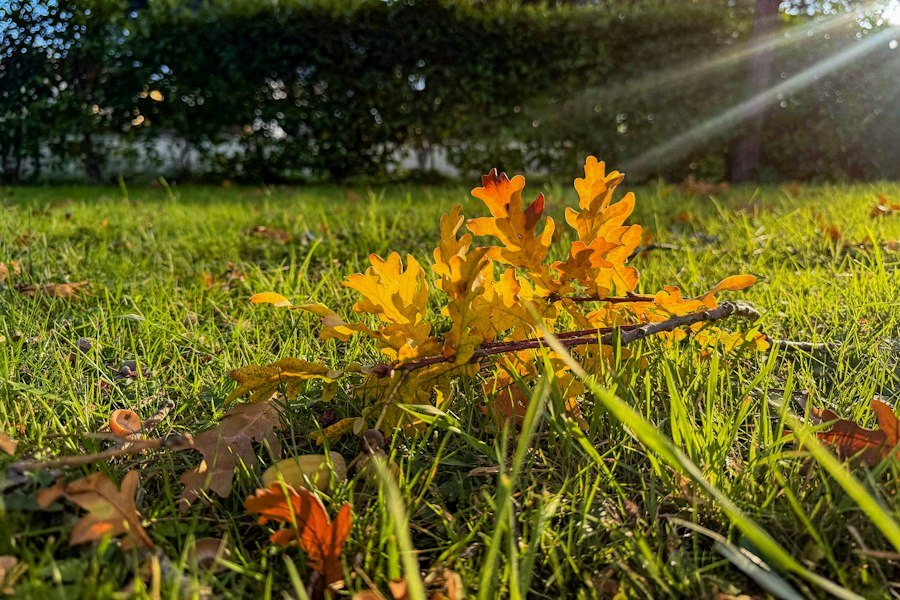
Golden oak leaves lying on green grass in low autumn sunlight
Plant profiles

Plant profile:
hawthorn.

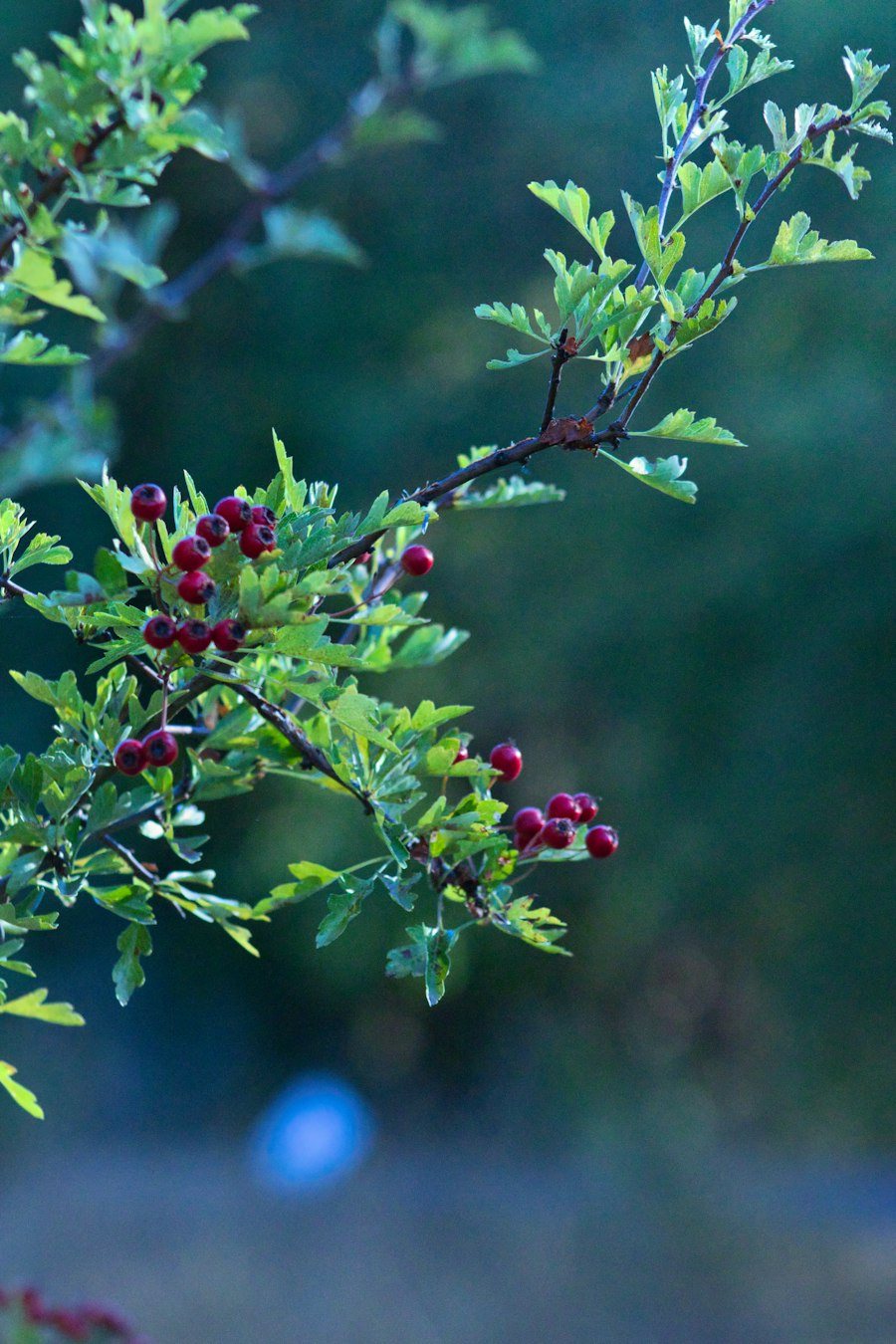
Hawthorn is probably the most important wildlife plant in the British countryside, and it deserves a place in far more gardens than it gets. Right now, in late October, the branches are heavy with dark red haws that will feed birds well into winter.

It is tough beyond belief. Hawthorn grows on almost any soil, from heavy clay to thin chalk, in full sun or partial shade. It handles exposure, pollution and salt wind without complaint. A mature hawthorn in a hedge will still be standing long after the fence beside it has rotted and fallen.

The wildlife value is extraordinary. The spring blossom feeds early pollinators when little else is open. The dense, thorny growth provides some of the best nesting cover in the country, and over 150 species of insect are associated with it. The berries are eaten by thrushes, redwings, fieldfares and blackbirds, often the first thing migrating birds look for when they arrive in autumn.

In a garden it works as a hedge, a specimen tree, or part of a mixed boundary. Left unpruned it makes a small, graceful tree to about six metres with a lovely spreading shape. Pruned hard, it forms the backbone of a stock-proof hedge that lasts generations. There is a double-flowered form and a pink one, but the straight species is the one that earns its keep. The native hawthorn, Crataegus monogyna, is the one the birds and insects know, and it costs almost nothing as bare-root whips planted this month.

A hawthorn branch bearing clusters of dark red berries among its lobed green leaves
From the field

Low light,
late October.

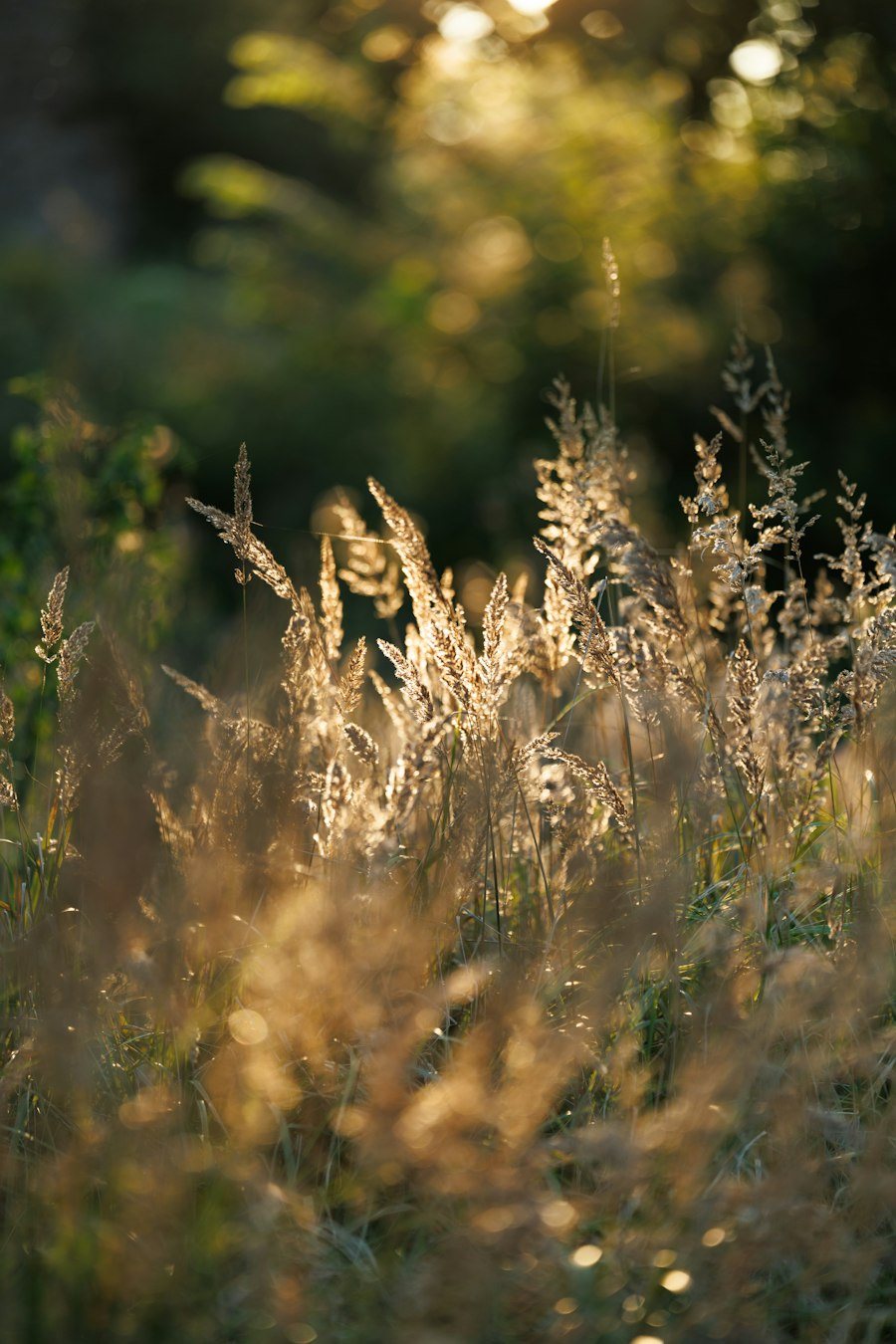
On a walk in late October, particularly in the early morning or late afternoon, the light sits so low that it comes through the landscape rather than falling on it. Grasses, seedheads, bare stems. Everything catches it sideways and glows.

This is the time of year when plants you barely noticed in summer become the main event. A stand of dried grass in a field margin, backlit by the setting sun, looks extraordinary. Teasel heads, dock skeletons, old umbellifer stems. All of them become silhouettes or lanterns depending on which side of them you are standing.

The reason it works so well is angle. In summer the sun is high and the light falls more or less evenly on everything. In late October it rakes across from the side, and anything with texture or translucency lights up. A fine grass that looked plain and green in July now has every seed catching fire.

The lesson for garden design is to think about where the light will be in autumn and winter, not just in summer. Place grasses and plants with good winter structure where the low sun will reach them. A border that faces into the afternoon light in October and November will give you weeks of beautiful effects for no extra effort at all. The plants are already dead or dormant. It is the light doing all the work.

Wild grasses glowing golden in low autumn sunlight with a soft dark background
Seasonal notes

The garlic
goes in now.

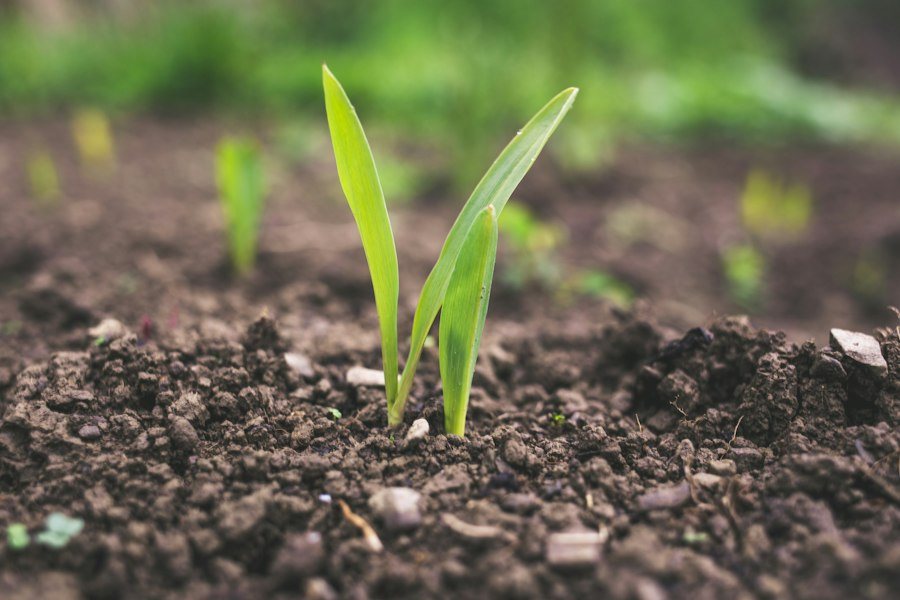
If you have not planted your garlic yet, this is the week. Garlic needs a long cold spell to develop properly. Without it the bulbs never split into decent cloves. Plant now and the winter does the hard work for you.

Buy seed garlic from a nursery rather than the supermarket. Supermarket bulbs are often varieties bred for warmer climates and they struggle in British soil. Look for UK-bred stock. Softnecks store well and are the reliable choice for most gardens. Hardnecks produce fewer but larger cloves and often have more flavour.

Break the bulb into individual cloves and plant each one pointed end up, about five centimetres deep and fifteen apart. Give them full sun and the best drainage you can manage. Garlic sitting in waterlogged soil over winter will rot. Raised beds are ideal, or work some grit into heavy clay before planting.

Then leave them alone. There is nothing to do until spring, when the green shoots appear and you can start weeding around them. The harvest comes in July, and if you have ever tasted garlic pulled warm from your own ground you will not want to go back to the shop-bought kind.

Young garlic shoots emerging from dark, freshly worked soil
Plant profiles

Plant profile:
spindle.

Spindle is one of those plants you do not notice for eleven months of the year. It sits quietly in hedgerows and on woodland edges, just another green shrub in the background. Then October arrives and it does something extraordinary.

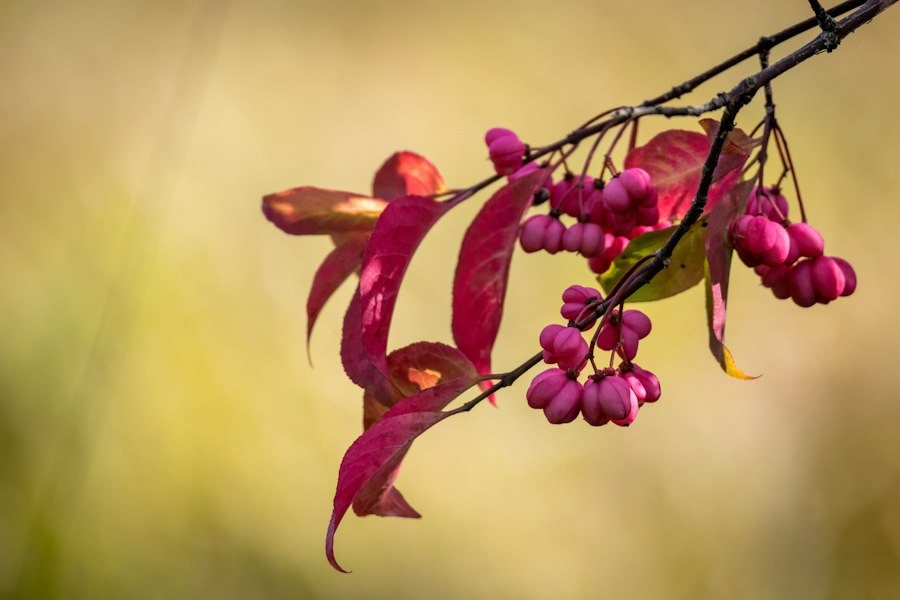
The fruit splits open to reveal bright orange seeds wrapped in vivid pink cases. The colour combination is so unlikely it looks almost tropical, and against the fading greens and browns of late autumn it is genuinely startling. No other native plant does anything quite like it.

Birds love the berries. Robins and blackbirds take them readily, and the dense twiggy growth provides good cover for nesting in spring. The autumn colour of the leaves is worth noting too. They turn shades of deep pink and crimson that hold well into November, often outlasting everything around them.

In the garden, spindle works as part of a mixed hedge, a specimen in a border, or a small tree if you let it grow unpruned. It is fully hardy, happy on most soils including chalk, and tolerates partial shade. It reaches three to four metres if left to itself but takes well to cutting.

Pair it with hawthorn and field maple for a native hedge that earns its keep in every season. Or give it a spot where you will pass it every day in October. Some plants deserve to be seen at their best.

Spindle berries in vivid pink with crimson autumn leaves against a soft golden background
From the field

Old man’s beard
on the hedgerow.

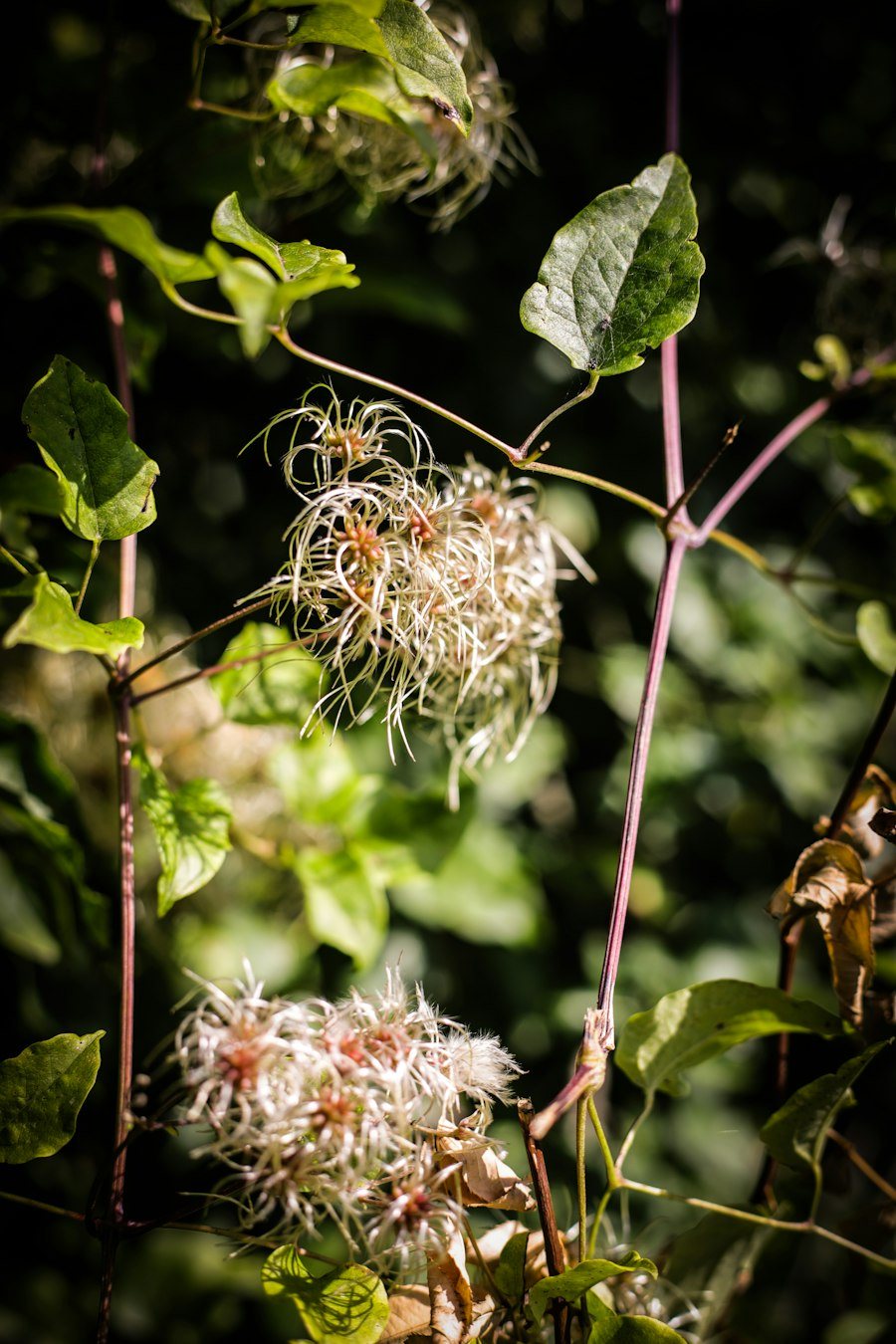
By late October the hedgerows are draped in silver. Old man’s beard, the wild clematis, has finished flowering and now its seedheads are catching every scrap of low autumn light. Whole stretches of hedge look as though someone has thrown gauze over them.

The flowers themselves are easy to miss. Small, greenish white, lost among the summer leaves. It is only now, when the foliage drops and the fluffy seed plumes open, that the plant really shows itself. Each seed carries a feathered tail designed to hold it on the wind, and in low sun those plumes glow.

It scrambles through and over everything, using leaf stalks that twist around whatever they touch. A strong plant can smother a hedge in a few seasons, and on chalk soils especially it is everywhere. The name tells you what to expect. By November, whole stretches of hedgerow look bearded with it.

The lesson for garden design is a simple one. Think about what a plant does after it has flowered. The seedhead, the winter silhouette, the way it catches frost or light. Some of the best moments in a garden happen long after the petals have fallen, and the plants that give you something in every season are the ones that truly earn their place.

Clematis vitalba seedheads catching the light as they climb through hedgerow foliage
Seasonal notes

Before the
first frost.

The first hard frost can arrive any night now. It might hold off until November, but in most of the UK it is just as likely to come this week. A couple of hours spent preparing for it are worth far more than trying to rescue things afterwards.

Bring tender plants under cover. Pelargoniums, tender salvias, citrus in pots, anything that wouldn’t survive a hard freeze. A frost-free greenhouse, a porch, even a bright hallway will do. The key is to move them before the frost, not after. Once the damage is done, it is done.

For pots too heavy to move, wrap the container itself in bubble wrap or hessian. It is the roots that are most vulnerable in a pot, exposed on all sides to cold air in a way they would never be in the ground. The plant on top can usually handle a frost. The rootball, frozen solid in a thin terracotta pot, often cannot.

Mulch your borders now while the soil still has warmth in it. A thick layer of compost or bark over the root zone holds that warmth in, protects shallow-rooted plants, and feeds the soil slowly through winter. And leave the dahlias standing until the frost blackens their leaves. They’re still feeding the tubers for next year. Once the top growth is gone, lift, dry and store them somewhere cool. Patience here means stronger plants next season.

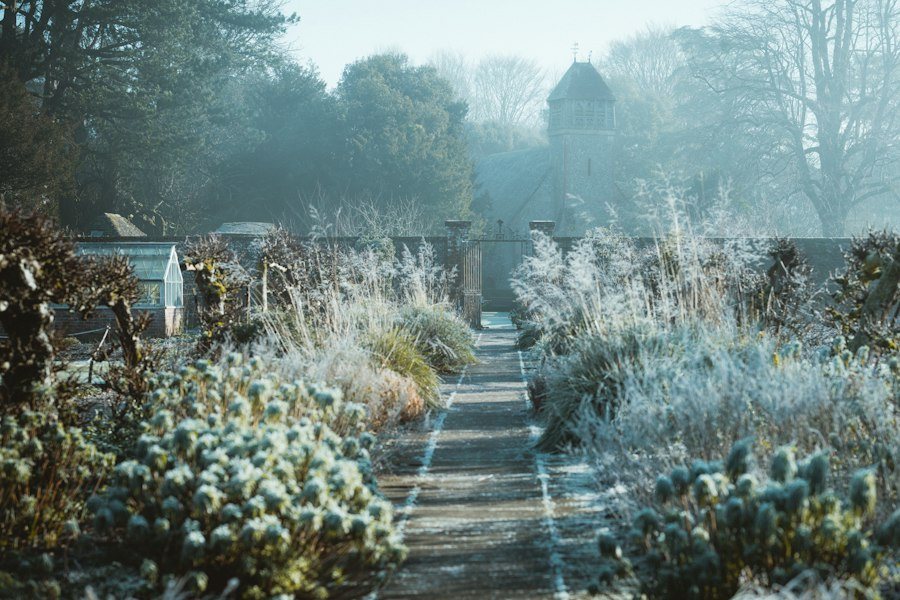
A garden path on a frosty morning, borders and grasses outlined in white against soft winter light
Plant profiles

Plant profile:
cyclamen hederifolium.

Most people think of cyclamen as a houseplant, the big floppy thing from the supermarket that dies in a warm room by Christmas. Cyclamen hederifolium is a different animal entirely. It is fully hardy, grows outdoors year-round, and thrives in the kind of dry, rooty shade that defeats almost everything else.

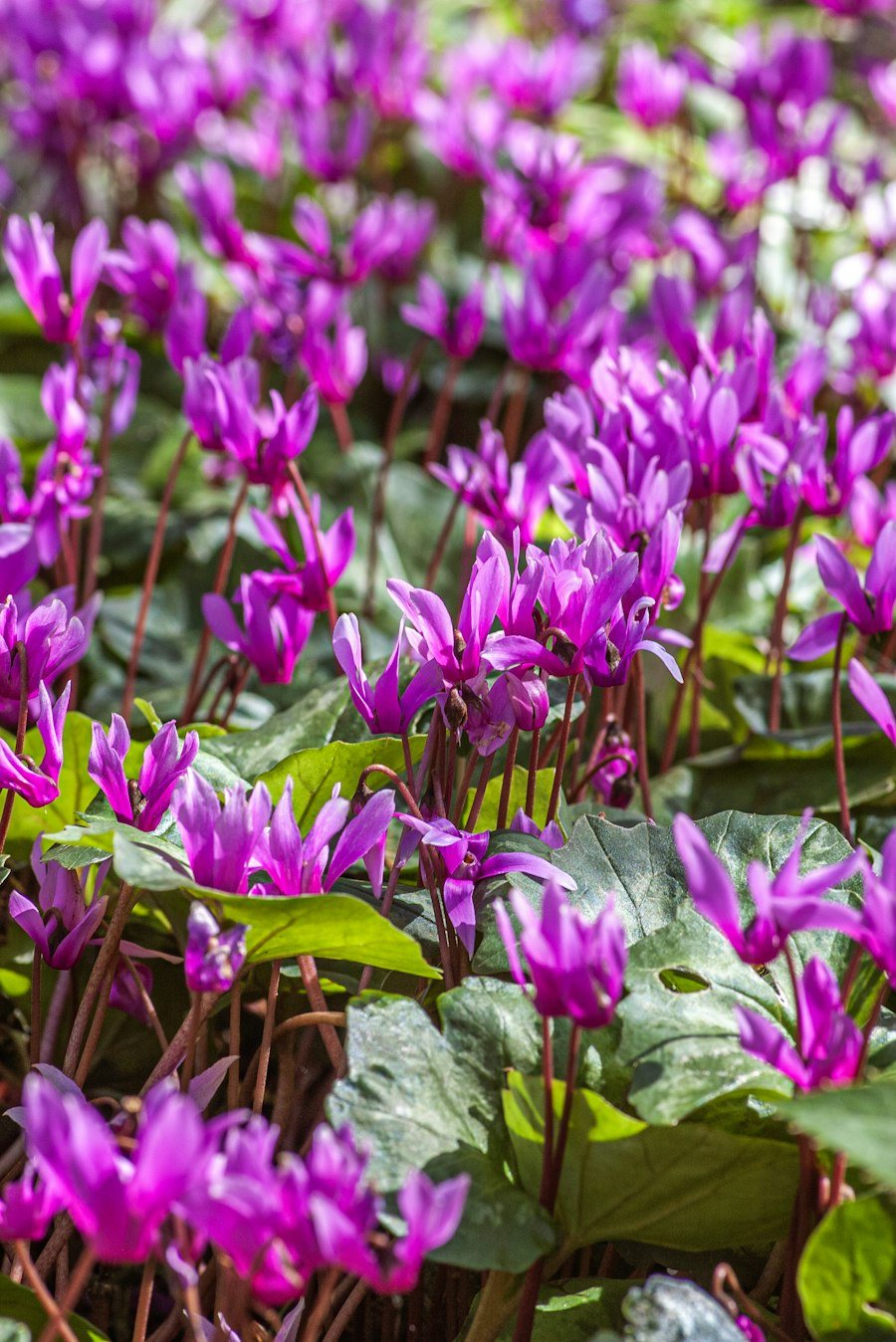
The flowers appear from September into November, before the leaves have fully emerged. They are small and elegant, pink or white, with swept-back petals that give each one a windswept look. They sit on short stems close to the ground, and on a dull October morning they catch whatever light there is.

The leaves follow, and they are worth the plant’s place on their own. Each one is patterned differently, silver and green in marbled, ivy-shaped outlines. They carpet the ground right through winter and spring, then die back in summer when the tuber goes dormant. So you get flowers in autumn, foliage when the garden needs it most, and a bare patch in summer when everything around it is covering the gap anyway.

It naturalises steadily. Seed falls, ants carry it off, and over the years a single tuber becomes a colony. You cannot rush this, but once established it looks as though it has always been there. Plant the tubers just below the surface in well-drained soil, under trees or against walls where nothing else will grow. Then leave them alone.

A carpet of hardy cyclamen in flower, small pink blooms on slender stems above marbled green leaves
From the field

Fungi on the
woodland floor.

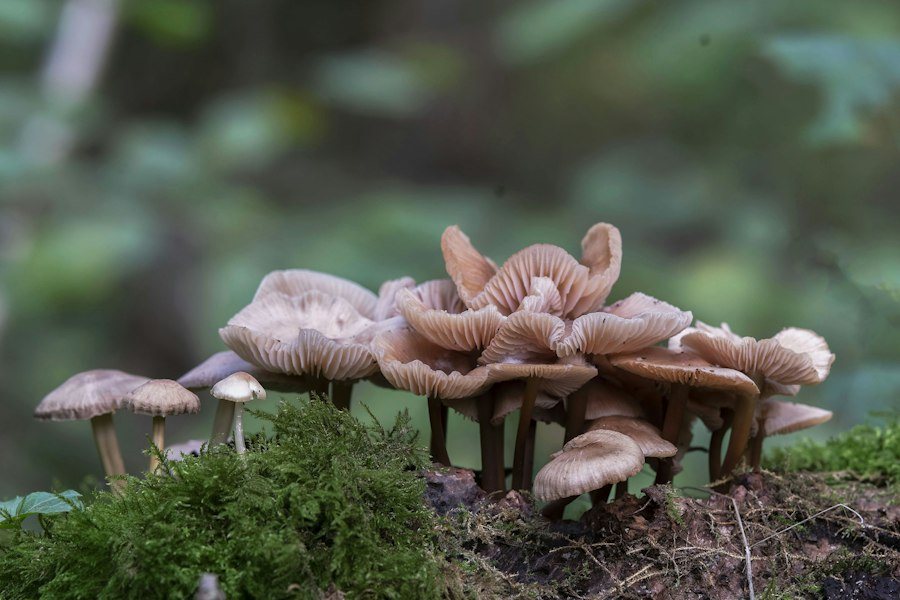
After rain in October the woodland floor comes alive with fungi. Clusters of small caps pushing through leaf litter, brackets on fallen logs, the odd fairy ring in a clearing. For most of the year the network is invisible, running silently through the soil. It is only now, briefly, that it shows itself.

What most people see is decomposition. A fungus growing on a dead stump is breaking it down, returning its nutrients to the soil, making them available to everything growing nearby. That process is slow and unglamorous, but without it every woodland would eventually drown in its own dead wood.

There is more to it than recycling, though. Many fungi form partnerships with living trees, connecting to their roots in a web that can stretch across an entire wood. Through that network, trees share sugars, nutrients and chemical signals. A healthy soil is not just dirt with things growing in it. It is a living system, and the fungi are what hold it together.

The lesson for gardens is to think about what you cannot see. Every time we dig unnecessarily, strip the ground bare or drench it in chemicals, we damage that network. Mulch, minimal disturbance and a tolerance for the odd mushroom in the lawn go a long way. The best soil is soil you leave alone to do its work.

A cluster of small mushrooms growing from a mossy log on the woodland floor
Seasonal notes

The quiet work
of October.

October does not look like much from the outside. The flowers are fading, the first frosts are close, and the garden feels like it is winding down. But this is one of the most useful months of the year for anyone willing to get on with a few unglamorous jobs.

Divide your perennials now. Anything that has made a decent clump over the summer can be lifted, split and replanted while the soil is still warm and the rain is doing the watering for you. Geraniums, astrantia, helenium, rudbeckia. The divisions establish fast in autumn and come back stronger in spring.

Start collecting leaves. Not into the bin, but into a simple wire cage or old compost bags with holes punched through. Left alone for a year or two, they break down into leaf mould, the finest soil conditioner you can get. It costs nothing, it improves every soil type, and once you start making it you’ll wonder why you ever bought the bagged stuff.

And if you are thinking about planting a tree or a hedge, this is the month. Bare-root stock begins arriving from nurseries in October. It is cheaper than pot-grown, it establishes faster, and the range is far wider. A tree planted this month will have months of quiet root growth behind it before next summer asks anything of it.

A carpet of fallen autumn leaves in shades of orange, gold and brown
Plant profiles

Plant profile:
Japanese anemone.

There are not many perennials still flowering well in October, and fewer still that look this good doing it. Japanese anemone starts blooming in late August and keeps going, sometimes right into November, producing wave after wave of simple, open flowers on tall, wiry stems.

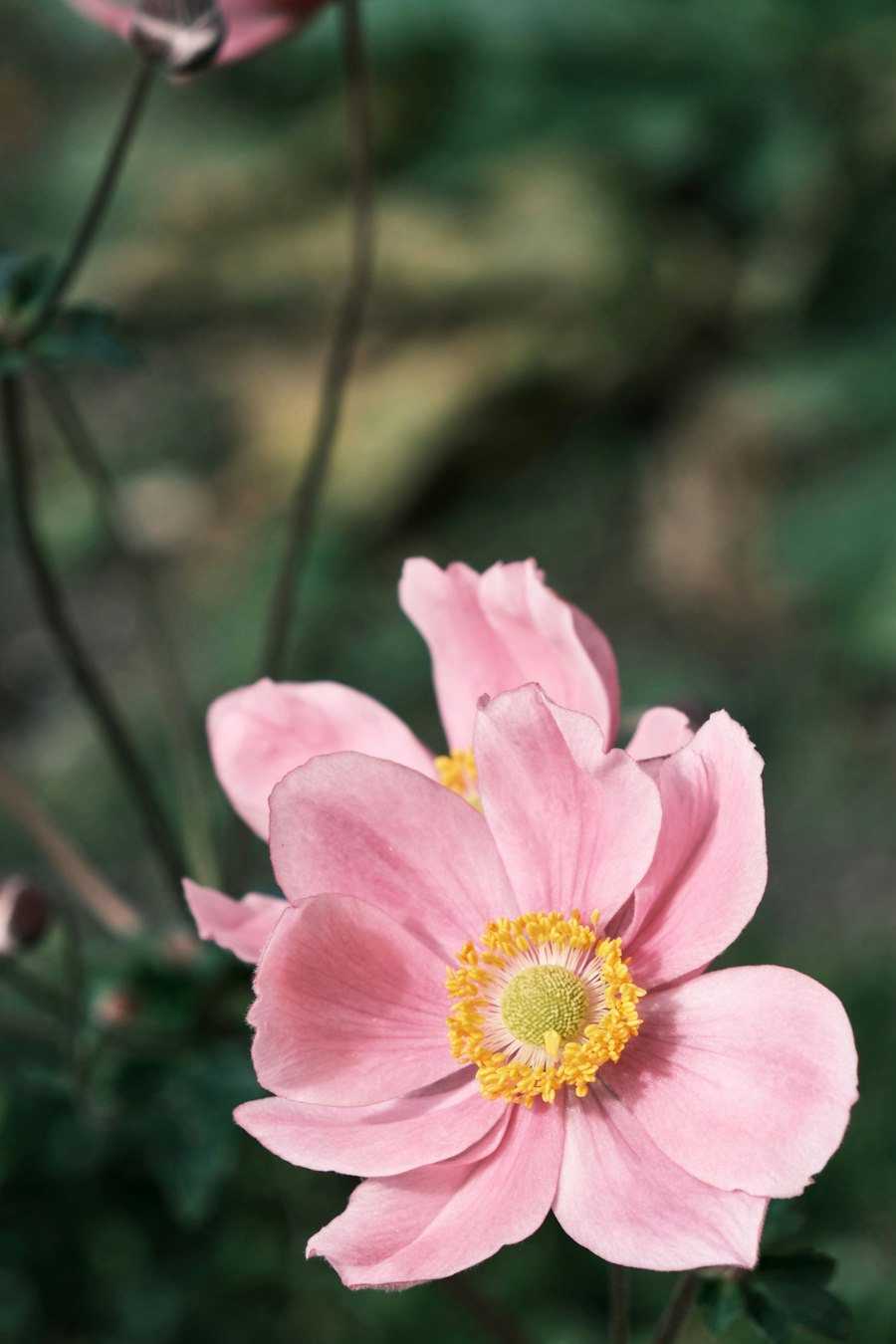
The flowers are elegant without being fussy. White or soft pink, with a ring of petals around a green and gold centre. They catch the low autumn light beautifully, and they are still visited by bees and hoverflies at a time when not much else is on offer.

What makes it especially useful is its tolerance of shade. Most late-season performers need full sun. Japanese anemone is one of the few that will flower generously under the canopy of trees or against a north-facing wall. Give it reasonable soil and some moisture and it will look after itself.

It spreads by underground runners, steadily rather than aggressively, and once established it is very hard to kill. That toughness is a genuine asset. A plant you can count on to flower in difficult spots, late in the season, with no staking, no feeding and very little fuss, is not one to overlook.

A soft pink Japanese anemone flower with a green and gold centre on a dark stem
From the field

Ivy in
flower.

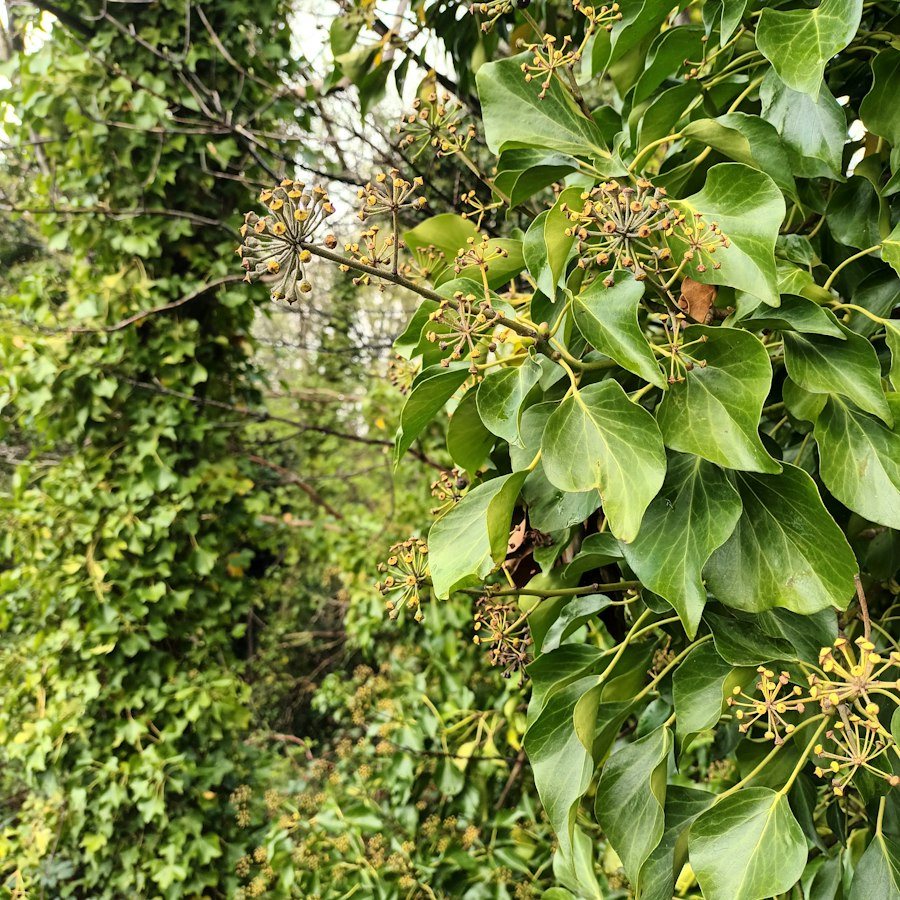
It is easy to overlook ivy. Most people see it as something to pull off walls and hack back, a nuisance rather than a plant worth paying attention to. But in October, if you stop and really look at an old ivy in flower, you might think again.

The flowers are small, yellowish green, gathered in round clusters that do not look like much to our eyes. To insects, they are a lifeline. On a warm October day you can hear an ivy in bloom before you see it. The hum of bees, hoverflies and late butterflies working those clusters is remarkable. At this time of year, very little else is producing nectar. Ivy is often the last significant source before winter shuts everything down.

The berries that follow ripen in late winter and feed thrushes, blackbirds and wood pigeons at the hungriest point of the year. The dense evergreen growth shelters nesting wrens and roosting insects through the coldest months. One plant, three jobs, three seasons.

The lesson for gardens is not to be too quick to dismiss the ordinary. A mature ivy left to flower in a corner of the garden is doing more for the wildlife around it than most of the things we carefully choose and tend. Sometimes the most valuable plants are the ones already there.

Ivy in flower, with clusters of small yellowish-green blooms among dark green leaves
From the field

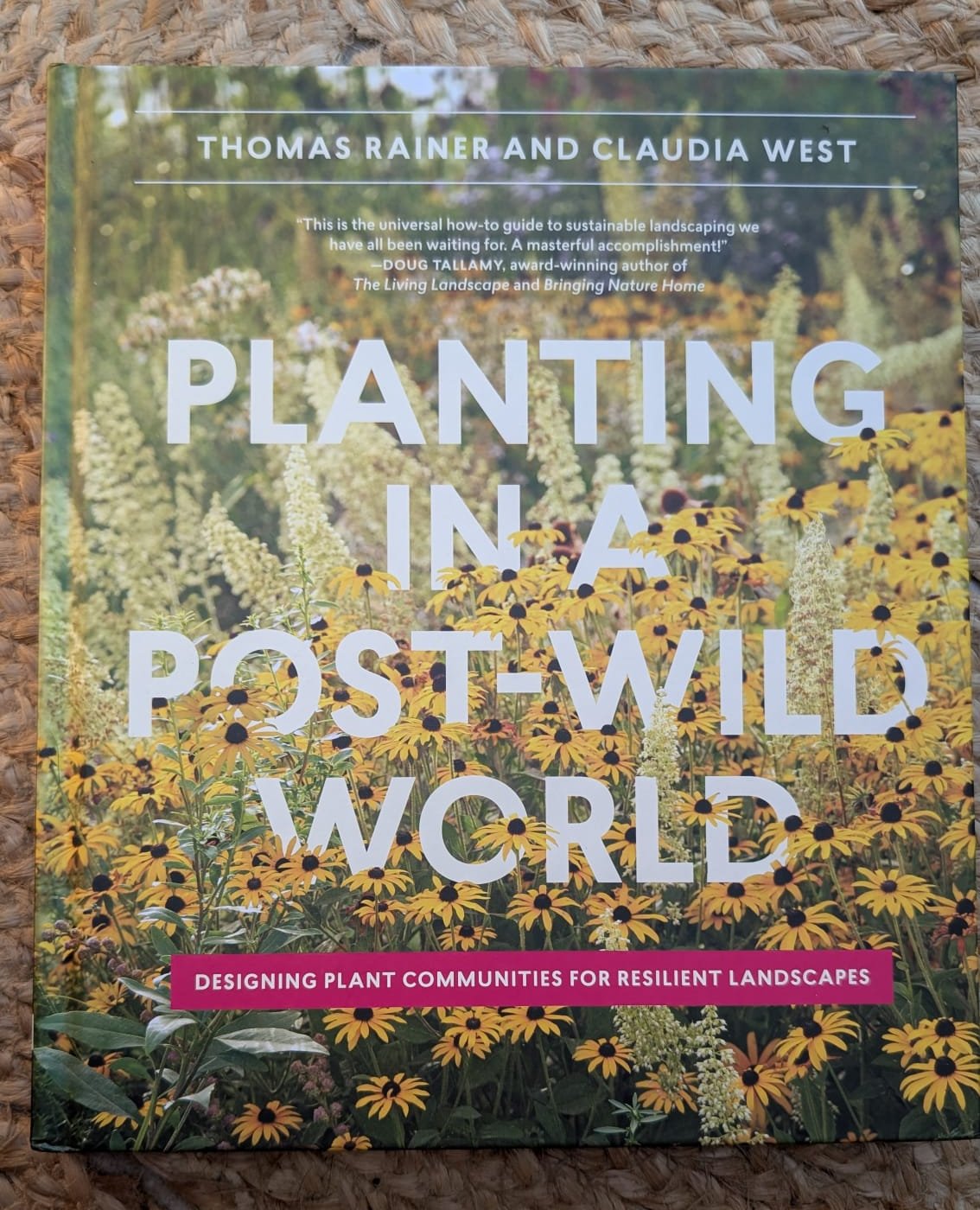
New reading.

New reading incoming.

The cover of Planting in a Post-Wild World by Thomas Rainer and Claudia West
Seasonal notes

Now is the
time for bulbs.

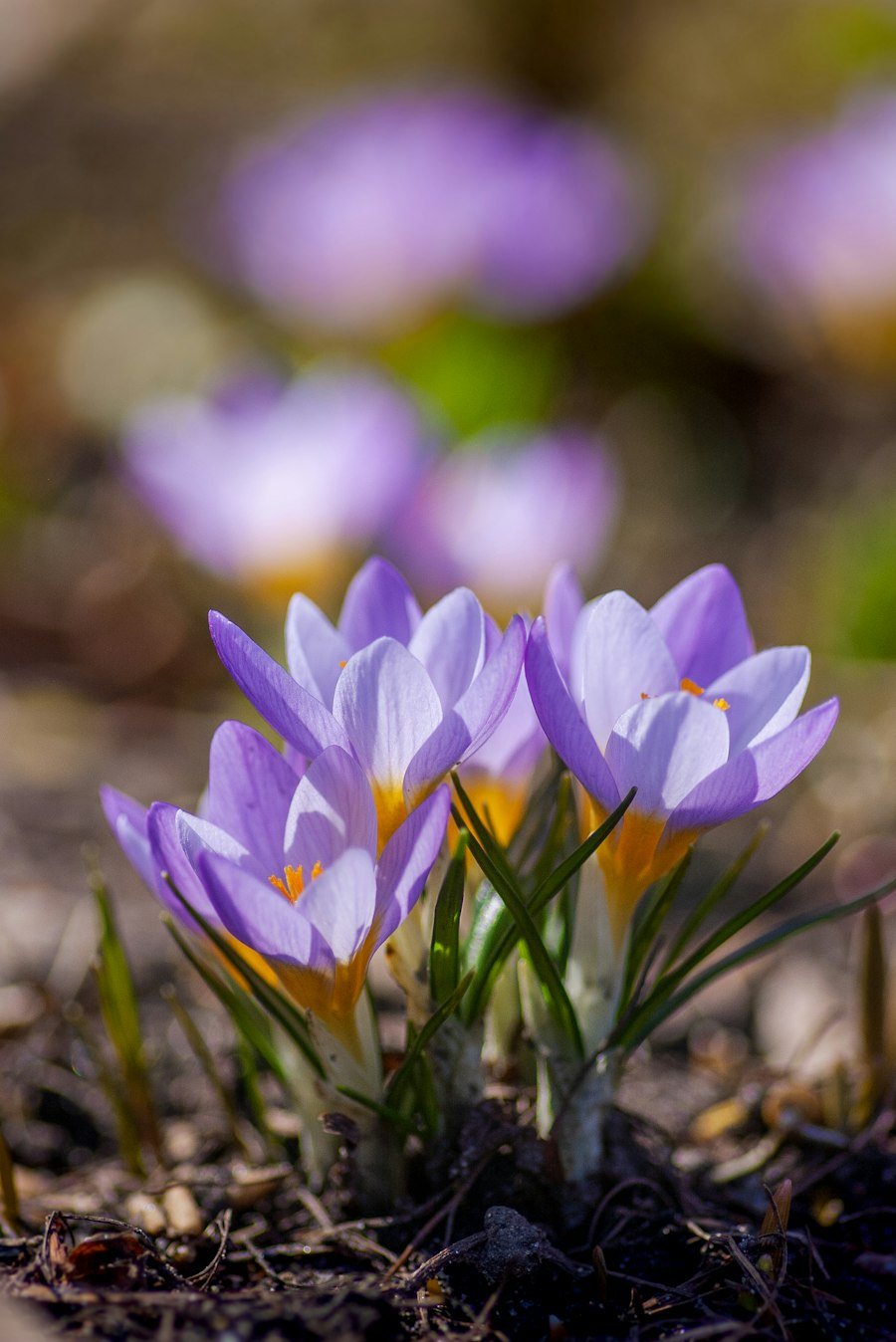
The best thing you can do for your garden in late September is plant bulbs. Not because it is exciting right now, but because in March, when you are desperate for colour and the garden still looks half asleep, you will be very glad you did.

Start with narcissus and crocus this month. They need the longest cold spell to root well before spring. Tulips can wait until November, which gives the soil time to cool and reduces the risk of tulip fire. Alliums go in now too, and they are worth every penny for the structure they bring in May.

Plant in loose drifts, not lines. Five or seven of one kind, scattered as if they fell there. Push them in at roughly three times their own depth. Under deciduous trees is ideal for many species. They flower and fade before the canopy closes over, so both tree and bulb get what they need.

The secret to bulbs that look natural rather than municipal is variety. A mix of heights, shapes and flowering times, planted in overlapping groups, gives you weeks of colour instead of one bright fortnight. And once they are in, most come back year after year with no help at all.

Purple crocuses flowering in a cluster, emerging from bare soil in early spring
Plant profiles

Plant profile:
verbena bonariensis.

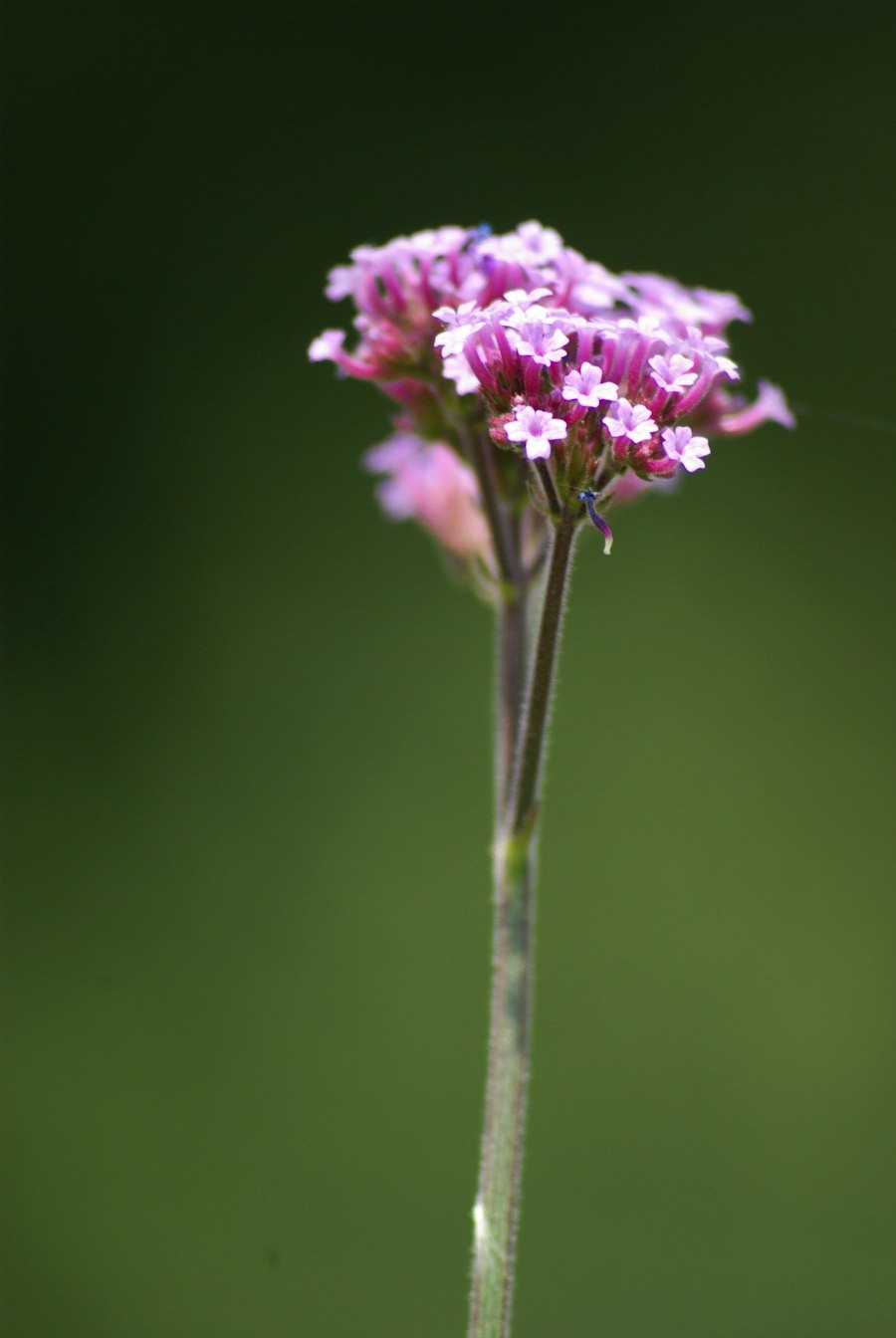
Verbena bonariensis is one of those plants that does something no other can quite manage. It grows tall, sometimes to head height, on thin, wiry stems that barely cast a shadow. The flowers sit in tight purple clusters at the top, held up like little landing pads.

Those landing pads are the point. From July right through to the first hard frost, they are visited constantly by bees, hoverflies and butterflies. On a warm September afternoon you can stand by a patch of it and just listen to the hum. It is one of the best late-season nectar sources we can grow.

Because the stems are so fine and see-through, you can plant it right at the front of a border without it blocking anything behind. That is unusual for a tall plant and enormously useful. It weaves through whatever is around it, connecting different parts of the planting without competing.

Give it full sun and reasonable drainage. It is not fully hardy in all winters, but it self-seeds so freely that replacements appear without any effort. Let the seedlings stay where they land and you get that effortless, naturalised look that is almost impossible to achieve on purpose.

A single verbena bonariensis flower cluster on its thin wiry stem against a soft green background
From the field

The churchyard
meadow.

Some of the finest grassland left in this country is in old churchyards. Undisturbed for decades, never reseeded, mown once or twice a year at most. The result is a depth of plant life that no amount of wildflower seed mix can match.

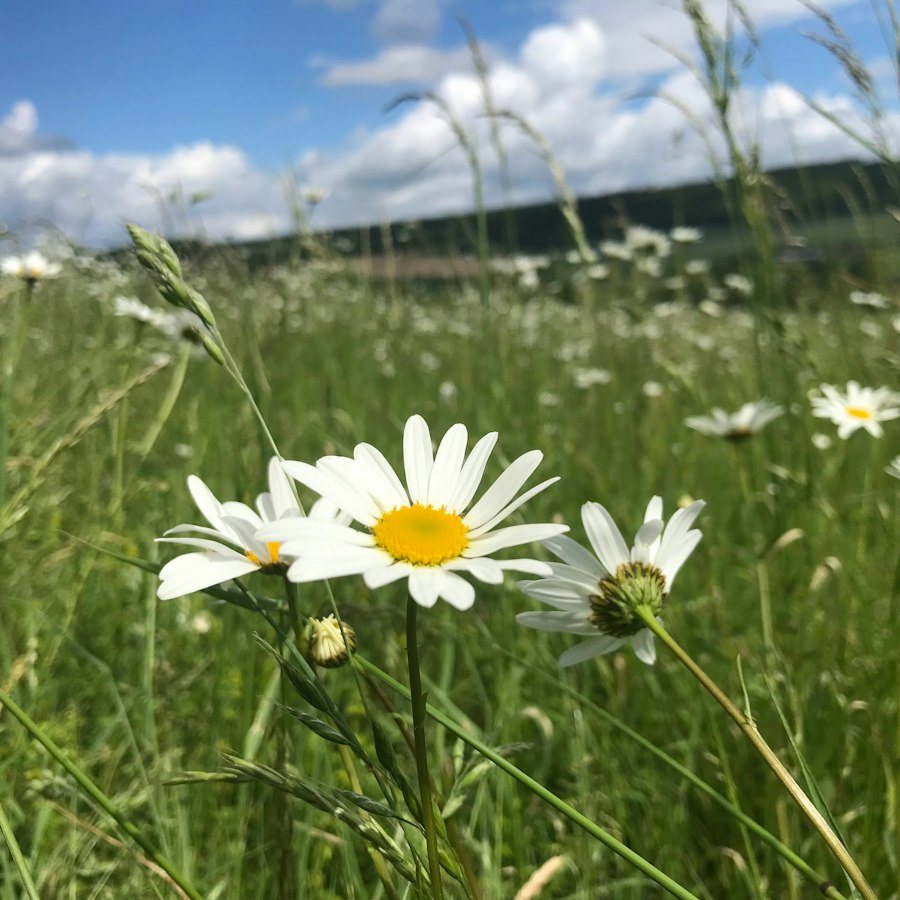
I walked through one recently and counted, without trying very hard, a dozen species in a few square metres. Lady’s bedstraw, yarrow, self-heal, bird’s-foot trefoil, ox-eye daisies still holding their last flowers, and several grasses I would need a book to name properly. All growing together in the kind of fine-grained tapestry that takes years to develop on its own.

The lesson for gardens is patience. We are so used to buying instant results that we forget how much richer a planting becomes when it has time to sort itself out. The species that like your particular soil and aspect gradually take hold. The ones that do not quietly fade. What you end up with is something that genuinely belongs to the place.

You cannot rush that process, but you can help it along by keeping soil lean, cutting at the right time, and above all by leaving well alone when things are heading in the right direction. The best thing a gardener can do is sometimes nothing at all.

Ox-eye daisies and grasses in an undisturbed wildflower meadow under a summer sky
Seasonal notes

Leave the
seedheads.

September brings a powerful urge to tidy. The borders are going over, the spent flowers look ragged, and every instinct says reach for the secateurs. I’d ask you to resist.

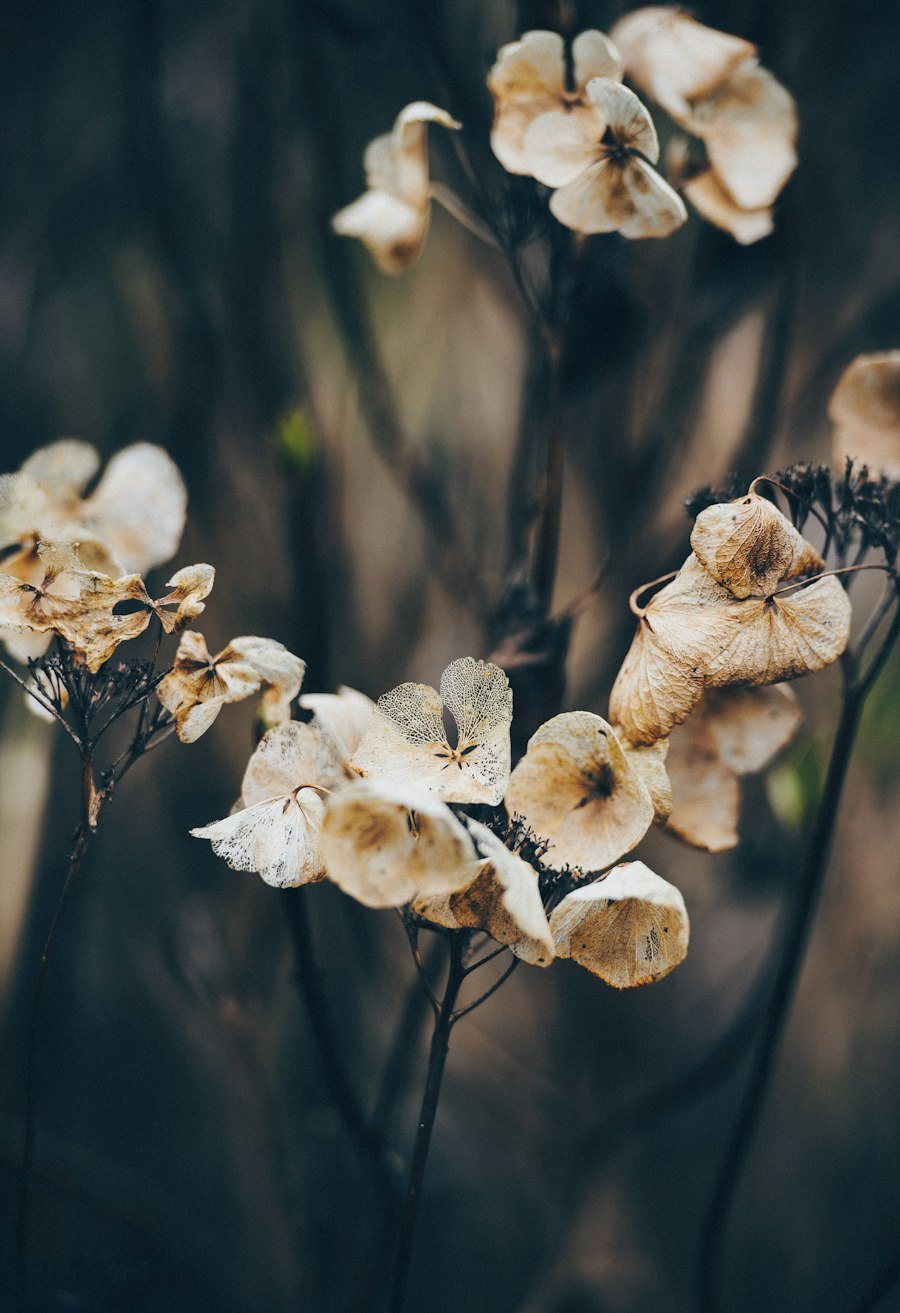
A seedhead is not a mess. It is food, shelter and structure. Goldfinches work through teasel and knapweed heads all autumn. Ladybirds and lacewings tuck themselves into hollow stems for winter. And on a cold morning, when frost catches every outline, there is nothing in the garden quite as beautiful.

The plants that earn their keep through winter are the ones with strong architecture. Sedums, echinops, eryngiums, grasses, anything with a good skeleton. Leave them all standing. Cut back only what has genuinely collapsed into mush or is diseased.

Tidying can wait until late February or early March, when new growth starts pushing through. By then the birds have had what they need, the insects have emerged, and you clear the old just in time for the new. It costs you nothing except the ability to look at a slightly untidy garden and see life rather than a job undone.

Dried hydrangea seedheads standing through autumn, their papery bracts catching the light
Plant profiles

Plant profile:
teasel.

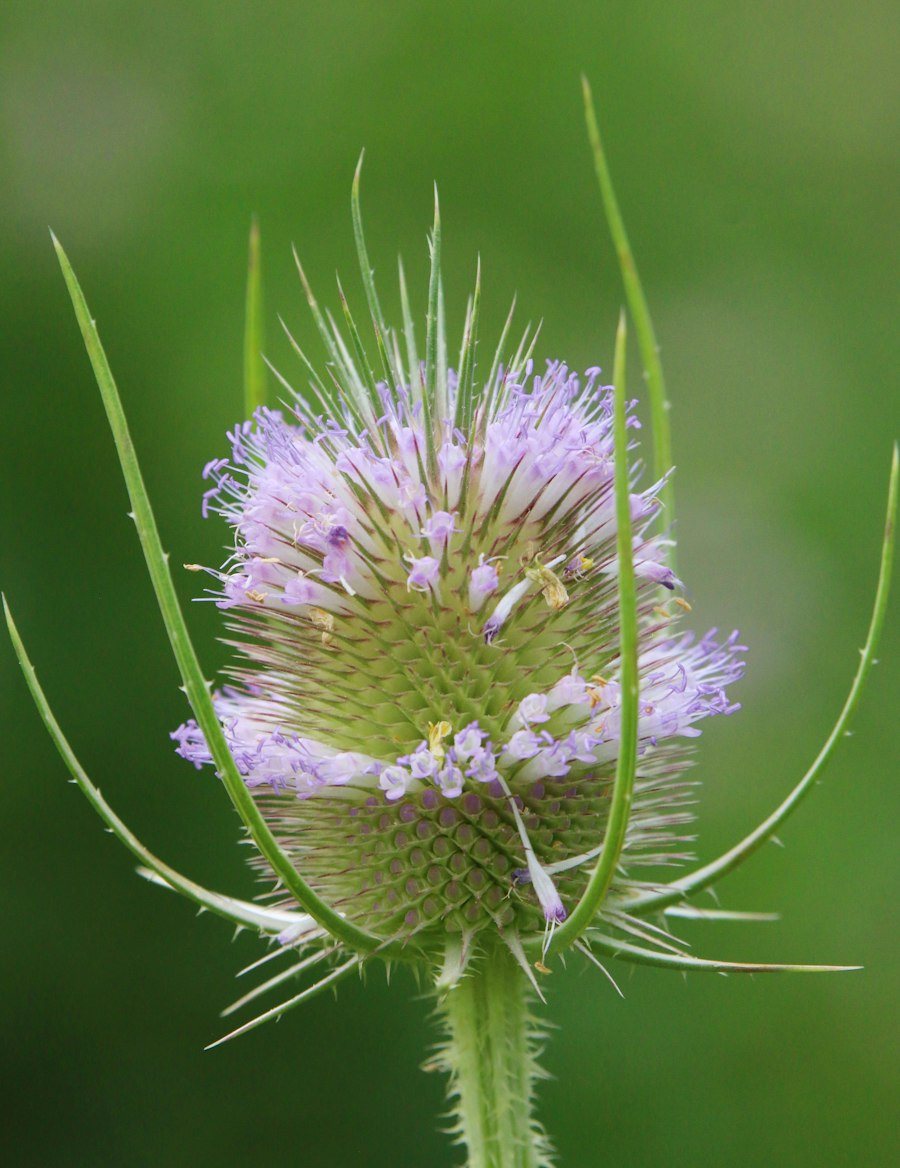
Teasel is not a subtle plant. It grows tall, stiff and upright, with prickly stems and those unmistakable egg-shaped flowerheads. The tiny purple florets open in a band around the middle of the head and work outward in both directions, top and bottom at once, which is genuinely worth watching if you catch it at the right moment.

It is a biennial. Year one is a flat rosette of large, slightly prickly leaves. Year two it sends up tall flowering stems, sometimes well over a metre, then sets seed and dies. That sounds like a lot of effort for one season of flower, but the seedheads are the real point.

They stand right through autumn and winter like little architectural sculptures, and goldfinches cannot resist them. If you want goldfinches in your garden, grow teasel. They’ll spend hours clinging to the heads, picking out seeds, and it is one of the most rewarding things to watch from a kitchen window on a grey November morning.

Give it full sun and any soil. Clay, chalk, rubble, it genuinely does not mind. It self-seeds freely, so pull the rosettes you don’t want while they are small. Let a few stand at the back of a border or in a wilder corner where their height and structure can do their best work.

A teasel flowerhead in close-up, its band of tiny purple florets ringing the egg-shaped head
From the field

The September
hedgerow.

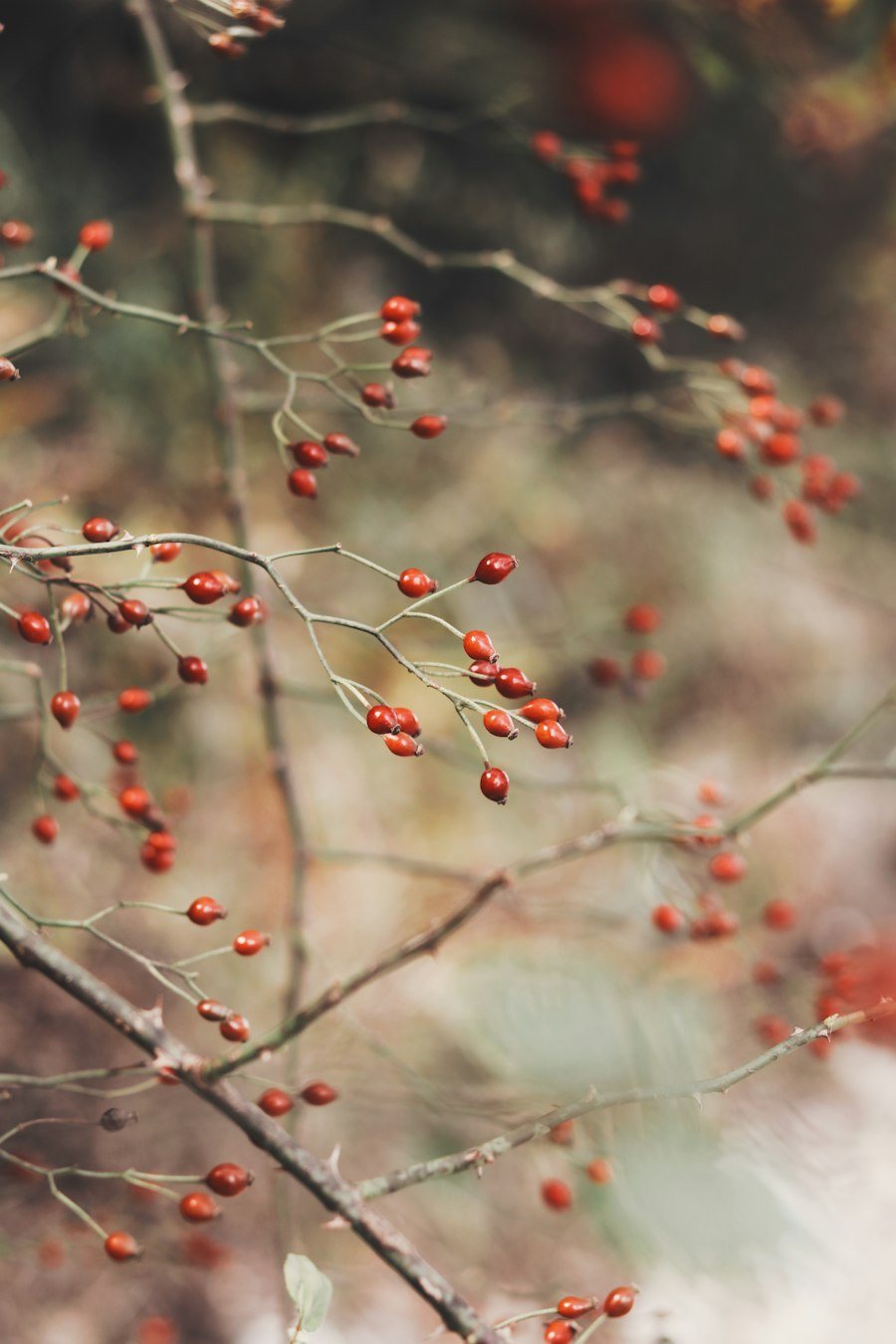
A walk along any country lane this week is a reminder of what a properly mixed hedge can do. Hawthorn heavy with dark red haws. Blackthorn thick with sloes, still hard and bitter but getting there. Dog roses hung with fat orange hips. Elder branches bowing under clusters of glossy black berries. All of it ripening at once, all of it feeding something.

What strikes me every September is the sheer density of it. A hedge only two or three metres deep holds more variety than most garden borders twice the width. It layers itself naturally over time, with taller thorns forming the backbone and climbers, wildflowers and ground cover filling every gap beneath. Nothing is wasted.

That layering is worth borrowing for garden planting. A few small trees or large shrubs for height and structure. Something scrambling through them for flower and fruit at a different level. Low planting underneath to hold the soil and keep it alive.

A single-species fence does a job. A mixed, layered boundary does a hundred jobs and feeds the garden around it into the bargain.

Clusters of bright red rosehips hanging from bare branches in an autumn hedgerow
From the field

Plants in
the cracks.

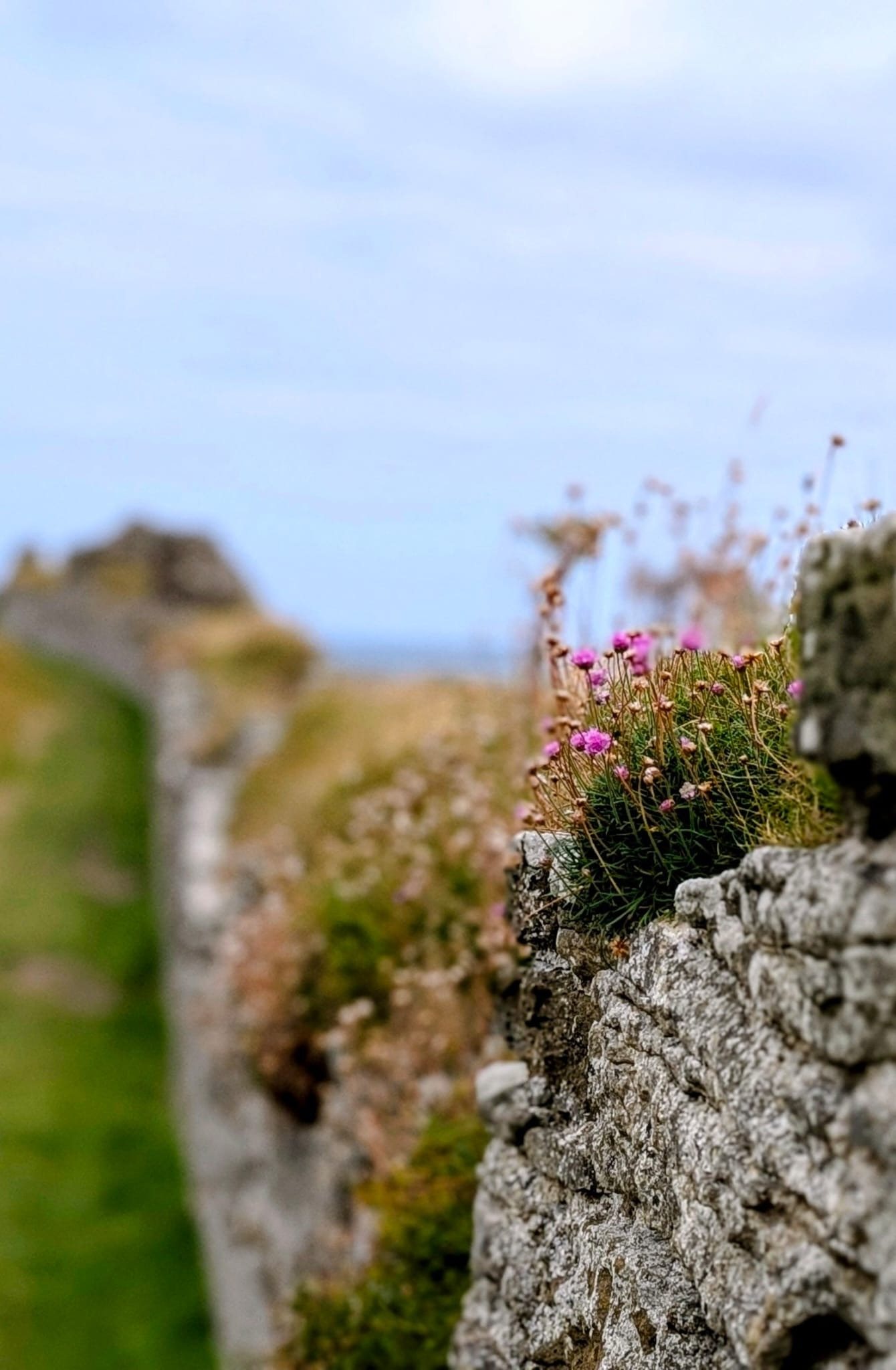
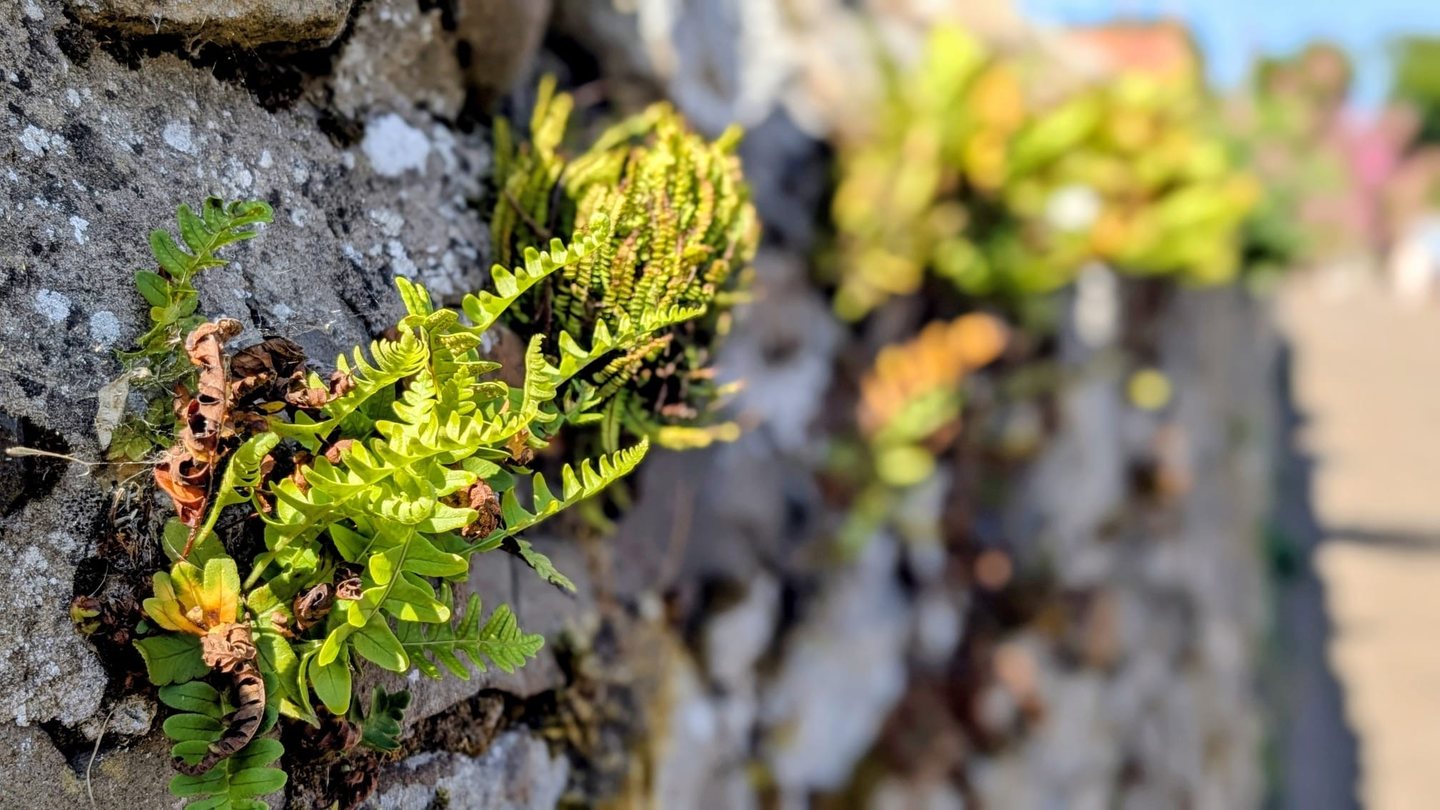
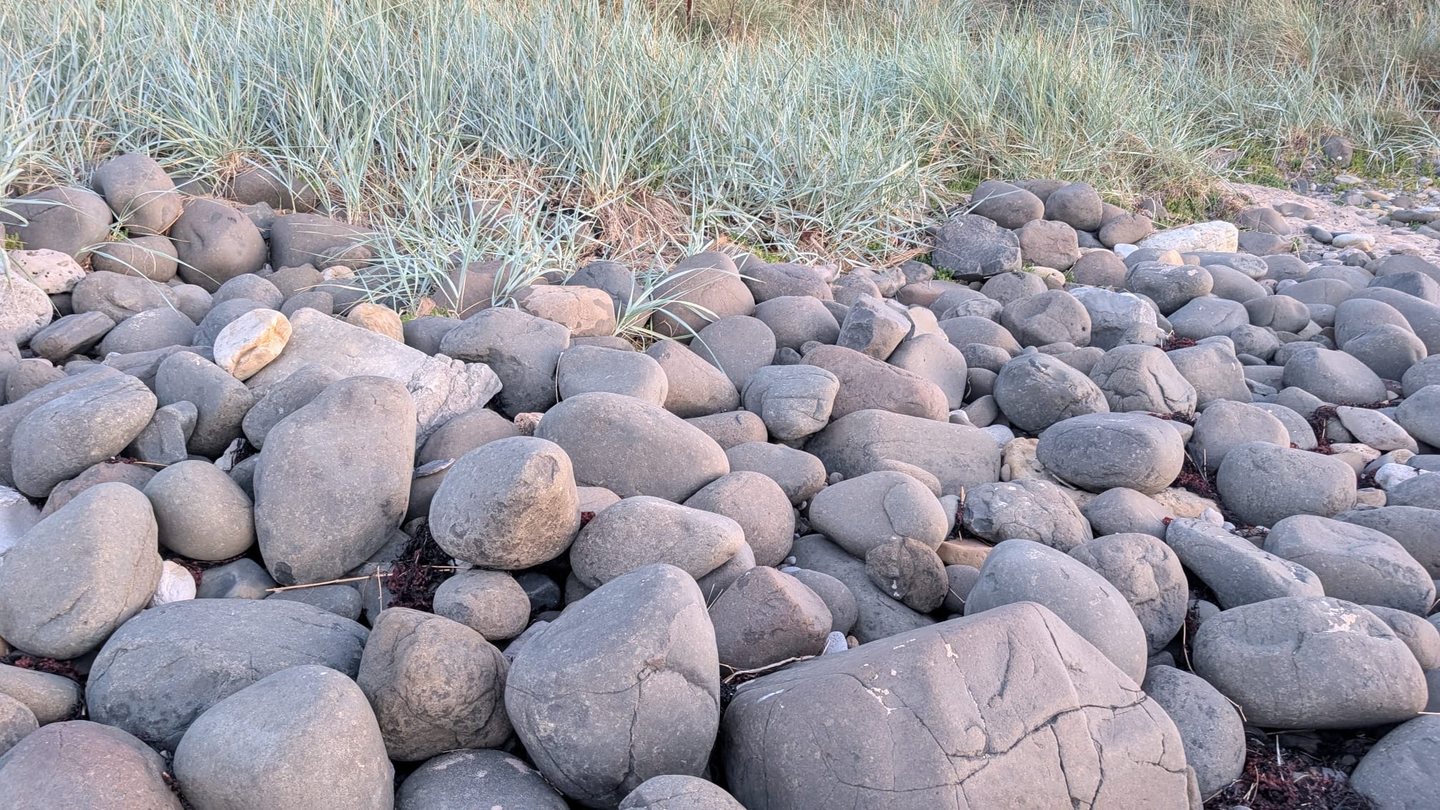
I love seeing plants growing where, by any sensible gardening logic, there is barely enough of anything to grow in. Sea thrift wedged into an old stone wall, grasses pushing out between huge beach boulders, and tiny ferns rooted into little more than a crack in the masonry.

There’s almost no soil, fierce exposure, salt, wind and very little available water — and yet they’re thriving. It’s such a good reminder that plants don’t necessarily need the rich, improved conditions we’re forever trying to give them. They need the right conditions for them.

I love the way these plants seem to belong completely to the place rather than having been put there. Something to remember in design: sometimes the most convincing planting comes from working with constraint, not trying to remove it.

Sea thrift flowering from a crack in an old stone wall
Small ferns rooted into the face of a stone wall
Grasses pushing out between large beach boulders
From the field

Holy Island
sand dunes.

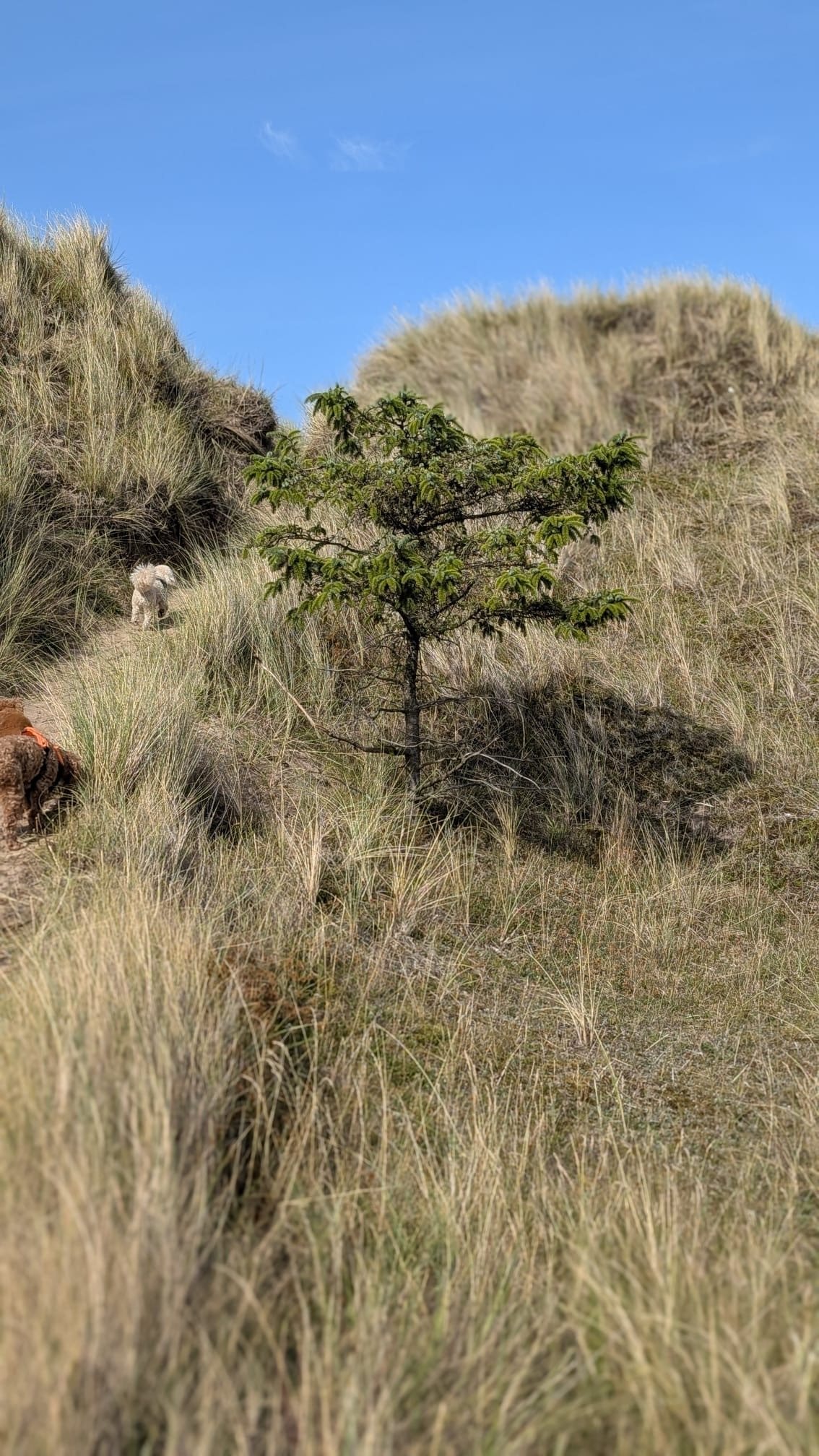
One, single, lone pine tree managed to find just enough of what it needed to grow.

A single small pine tree growing among marram grass in the Holy Island sand dunes
Seasonal notes

After the hottest
of summers.

This summer asked a lot of our gardens. Weeks on end without rain, a hosepipe ban, and lawns that crunched underfoot by July. If your borders are looking brown and defeated, you are in good company.

The most important advice I can give is this: don’t rush for the spade. A lot of what looks dead right now is simply protecting itself. Established shrubs and perennials shut up shop in a drought, dropping leaves and retreating to their roots to sit it out. Before you condemn anything, scratch a stem with a thumbnail. Green under the bark means life, and many plants written off in September are back by May.

Lawns almost always recover. A brown lawn is a dormant lawn, not a dead one, and the first proper week of rain will usually bring it round without any help from you.

When the rain does return, let it do its work before you replant. Autumn is the best planting season of the year in any case: the soil is still warm, the rain does the watering, and roots get a full winter to settle in before they are asked to cope with another summer. Replace your losses then, once you can see what has genuinely gone.

And when you do replant, let this summer inform the choices. The plants that shrugged it off were the ones suited to their spot in the first place. Choose for your conditions rather than against them, mulch generously while the ground is damp, and water new planting deeply and rarely rather than little and often. A garden picked for the place it grows in will meet the next dry summer on far better terms.

A lawn burnt brown and dormant after a long drought
Plant profiles

Plant profile:
knapweed.

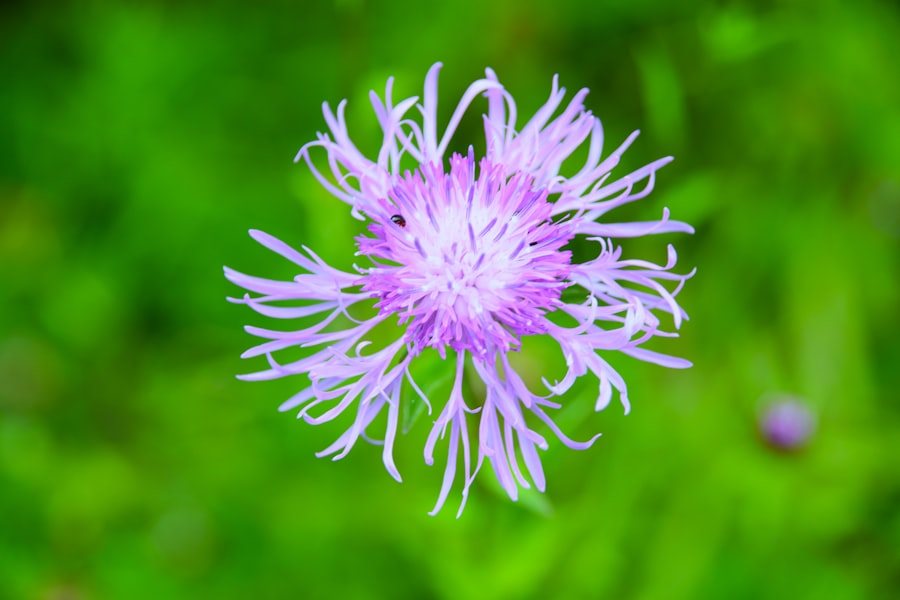
If I could put one meadow plant in every garden, knapweed would be on the shortlist. A tough, thistle-like native without the prickles, with jewel-purple flowers from June into September.

It earns its place twice over. It is one of the best nectar plants we have, worked by bees, butterflies and hoverflies all summer long, and if you leave the seedheads standing the finches will pick them over right through autumn.

It also thrives on poverty. Thin, dry, hungry soil that makes most border plants sulk suits it perfectly, which is why it shrugged off this summer while so much else struggled. Give it sun, drainage and not much else.

Grow it with fine grasses, field scabious and wild carrot for a proper meadow feel, or thread it through a naturalistic border and let it seed itself gently where it is happy. Cut back in late winter, and leave everything standing until then.

A knapweed flower, its fringed purple florets fully open
From the field

A garden escapee,
thriving on a cliff edge.

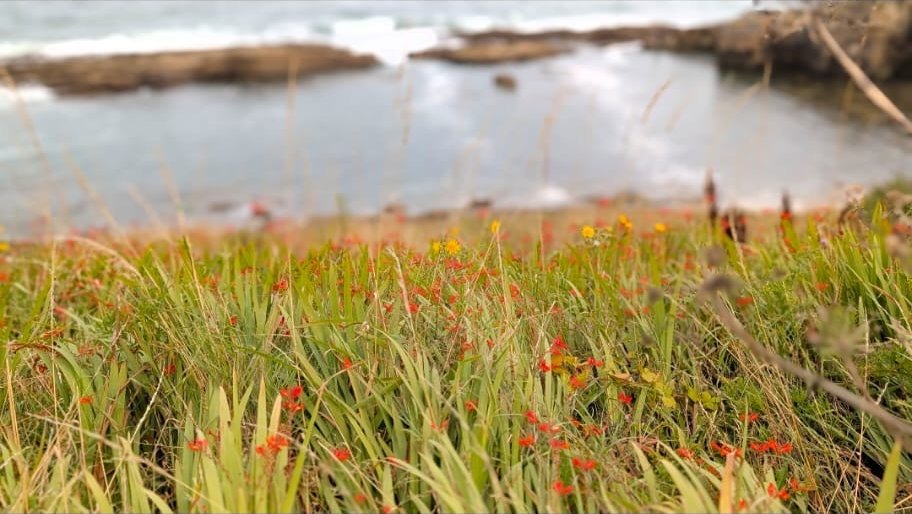
Spotted on a clifftop walk: montbretia in full flame, growing in salt wind and next to no soil, with the sea for a backdrop.

Montbretia is a garden escapee. It jumped a fence and somehow it found its way here and made itself thoroughly at home. So much at home, in fact, that it is now officially listed as invasive in the wild. Nobody waters this clifftop colony, nobody feeds it, and nobody staked it, yet there it is, flowering harder than most borders manage in a good year.

That is the lesson I keep coming back to. When a plant is well matched to its conditions it largely looks after itself, and that toughness is exactly what I look for when choosing plants for a garden.

The skill is in picking the ones that stay good guests, rather than the ones that take over.

Montbretia flowering through coastal grass on a cliff edge, with a rocky cove behind

Training and study

Where the
thinking
comes from.

Formal training, continuing study, and a lot of time spent looking at how planting actually behaves once it is in the ground.

Trained

Capel Manor College

Garden Design. One of the country’s established horticultural colleges, and where the foundations were laid.

Continuing

Plants and Planting Design

Ongoing study, deepening my knowledge of plants themselves rather than only the drawing of a scheme.

Fieldwork

St Andrews Botanic Garden

Exploring how plants respond to climate, landscape and land management.

Fieldwork

The Serge Hill Project

Including the Untangling Plants and The Tangled Bank projects, which increasingly shape the way I approach planting design.

Alongside all of it, years of hands-on garden maintenance. There is no substitute for having weeded, pruned and dug the kind of planting you are asking someone else to look after.

What you’ll find here

Three strands.

Written as the year turns rather than to a schedule, so they arrive when there is genuinely something to say.

Seasonal notes

What the garden is doing

What’s doing well, what’s going over, and what’s worth planting now. The jobs actually worth doing this month, and the ones that can wait.

Plant profiles

The ones I keep coming back to

Why a plant earns its place, what it likes to grow alongside, how it behaves after three years rather than three months, and what it feeds.

From the field

Study, fieldwork and site

Notes from the fieldwork and the reading, and from time spent looking at how planting behaves in the ground rather than on a plan.

In the meantime

Work in progress, plants worth a second look and whatever is flowering that week tend to end up on Instagram first.

Follow on Instagram

Let’s create
something
beautiful.

Whether you’re starting with a blank canvas or rethinking what’s already there, I’d love to hear your ideas.

Get in touch